A laboratory glassware washer should do more than make bottles and beakers look clean. In an analytical laboratory, residues left inside a vessel can affect the next sample, while an unsuitable cleaning process can add contaminants during rinsing or drying. Choosing the right washer therefore means evaluating the full cleaning cycle: what glassware it handles, how water reaches difficult surfaces, what rinse quality it provides, and how clean items are returned to service.
For chemical, environmental, food, and third-party testing laboratories, a purchase decision must also make sense operationally. Daily glassware volume, available floor or counter space, the mix of narrow-neck vessels, and the laboratory's contamination limits all shape the most useful configuration. This guide explains what to compare before requesting a quotation for a lab glassware washer.
Why Washer Selection Matters
Glassware is reused across many preparation and measurement steps. A visible residue is an obvious warning, but a trace contaminant may be difficult to detect by inspection alone. A cleaning process should be designed around the laboratory's downstream analytical requirements, not just the appearance of the vessel after washing.
Manual washing may appear flexible, particularly for a small laboratory, but it requires staff time and repeated handling of breakable items. Labconco identifies labor, breakage, and injury risks as reasons laboratories investigate automated washing. A dedicated laboratory glassware washing machine can also make a repeatable cleaning sequence easier to organize, provided the model offers the controls required for the application.
Repeatability does not mean all washers give the same result. Cleaning action, detergent, exposure time, wash temperature, and the quality of the final rinse must work together. A machine that suits large open beakers may not adequately reach the inside of a narrow volumetric flask without appropriate fixtures. Selection should begin with the actual glassware inventory and the residue types being removed.
Washer Formats and Capacity
Undercounter and freestanding laboratory washers solve different space and workload problems. An undercounter unit may suit a laboratory where floor space and daily load size favor a compact installation. A freestanding system can be considered when the laboratory needs a different loading arrangement or more capacity. Labcompare describes undercounter washers as a common basic, economical format, but the format alone does not establish cleaning performance.
To estimate capacity, count the actual items used on a busy day. Separate open vessels, narrow-neck flasks, pipettes, and small vials instead of treating them as interchangeable pieces. The number of objects that physically fit into a chamber can be very different from the number that can receive effective spray coverage in a suitable rack.
Request the machine's external dimensions, loading dimensions, and approved loading arrangements. Then map a representative batch. A lab washing mostly large beakers has different requirements from one washing many volumetric flasks and pipettes. The best capacity figure is a load plan based on the correct accessories, not an unsupported estimate derived from model numbers.
Utilities belong in the same calculation. Ask about the required connections for incoming water, drain, power, and any purified-water supply. Installation space must include the practical access needed for loading and servicing. If multiple cycles are needed, estimate daily throughput using the complete wash, rinse, unload, and drying sequence rather than a chamber-size claim alone.
Cleaning Narrow-Neck Glassware
The hardest surfaces to clean are often the ones the operator cannot easily reach. Narrow-neck glassware such as volumetric flasks, pipettes, BOD bottles, and autosampler vials needs water and cleaning solution directed into interior spaces. Laboratory Network describes direct-injection baskets as important for these vessel types. A spray pattern effective on the outside of an item does not guarantee effective cleaning inside its neck.
Mechanical action matters at least as much as a headline pressure rating. Laboratory Network explains that high circulation rates can be more useful for effective cleaning than high pressure, which can create a greater risk of damaging delicate glassware. This is a practical reason to ask how the washer circulates water and what fixtures carry cleaning fluid into specific vessels, rather than selecting a machine merely because it advertises strong spraying.
When speaking to suppliers, show them the vessel catalog or photographs of your most difficult items. Ask which vessel types can be cleaned with the supplied accessories, which require optional direct-injection fittings, and which are outside the machine's supported application. Also ask how racks or holders prevent movement that could cause breakage during the cycle.
Cleaning narrow-neck vessels and drying them are separate challenges. Labconco notes that drying interiors may require air directed through spindle racks. Do not assume that an instrument offering pressure flushing also includes direct-injection spindles or internal hot-air drying. Those features should be confirmed individually on the model under review.
Water Quality, Detergents, and Rinsing
The final rinse can either protect or undermine the cleaning process. When the next analytical procedure is sensitive to ions, introducing minerals from rinse water is an avoidable concern. Labcompare notes that deionized water does not add the contaminating ions present in ordinary water and that the DI rinse should be kept separate from the tap-water or recirculation path. Labconco also identifies a purified DI or RO final-rinse option as a common laboratory-washer consideration.
Determine what the laboratory already has available: tap water, deionized water, reverse-osmosis water, or another purified source. Ask whether the washer supports the desired final rinse, how water enters the machine, and whether the supplier requires a particular supply quality. A claim that the machine can wash glassware says little about the quality of the water used in its final cleaning step.
Cleaning chemistry should be treated as part of the process. Laboratory Network lists detergent, temperature, time, mechanical action, and direct injection among the key variables for specialized glassware washing. Some residues may call for different cleaning agents or a neutralizing stage. For example, its discussion of petroleum-related residues describes a specific high-temperature wash and acid-neutralizer arrangement. Such an example is not a universal recipe; the appropriate chemistry depends on residue, glassware, washer capability, and laboratory safety requirements.
Use detergents and neutralizers approved for the laboratory washer and the intended application. Residential dishwashers and household cleaning processes should not be treated as equivalent to laboratory washing: Labconco highlights differences in construction, racks, temperatures, and programming. The supplier should be able to explain which chemistry and rinse arrangements the machine actually supports.
Drying and Contamination Control
A completed wash cycle does not guarantee that all items are dry or ready for trace-sensitive work. Laboratories should decide whether they need to unload wet items for separate drying, use a machine with an integrated drying stage, or use dedicated drying accessories for difficult vessel shapes. Ask whether hot-air drying, filtered air, or forced-air delivery through narrow-neck fixtures is included, optional, or unavailable.
Some higher-specification washers offer specialized drying or cycle-documentation features. HEPA-filtered drying, validated cleaning programs, and direct-injection spindles should be evaluated as individual category capabilities; they must not be assumed to be present in every glassware cleaning instrument. Buyers should request supporting specifications for any such feature they consider essential.
The machine itself must also avoid becoming a contamination source. Labcompare points to stainless steel chambers as a robust choice when incidental laboratory chemical exposure is possible. Its guidance on separating DI water from tap and recirculated water is equally relevant: if final-rinse water is contaminated by the wrong flow path, a clean-looking load may still be unsuitable for sensitive analysis.
Also ask how contaminated wash water leaves the machine. Labconco explains that systems with separate clean-water and dirty-water pumps can reduce cross-contamination risk, while not all washers use that arrangement. The correct question is not whether all machines must have identical plumbing, but whether the proposed design and cleaning process meet the laboratory's actual contamination-control requirements.
Six Questions to Ask Any Supplier
1. Which glassware and load sizes are supported?
Provide a representative inventory with vessel height, opening size, and typical daily quantities. Request a loading plan and confirmation of the fixtures needed for each item. Avoid guessing capacity from a product code.
2. What cleaning action reaches the inside of each vessel?
Ask about pressure flushing, circulation, spray arms, direct-injection fittings, and the arrangement used for long or narrow-neck items. Request a demonstration or documentation matching your actual glassware where possible.
3. What water quality and detergent options are available?
Verify whether a purified DI or RO final rinse is supported, whether its path is separated from other water, and what detergents or neutralizers are compatible. Ask about the required water and drain connections.
4. How does the drying stage work?
Confirm whether drying is integrated, whether forced air reaches the inside of hollow ware, and whether any filtration or specialized accessory is available. If drying is not included, account for a separate process in the laboratory workflow.
5. What published dimensions and functions belong to the exact model?
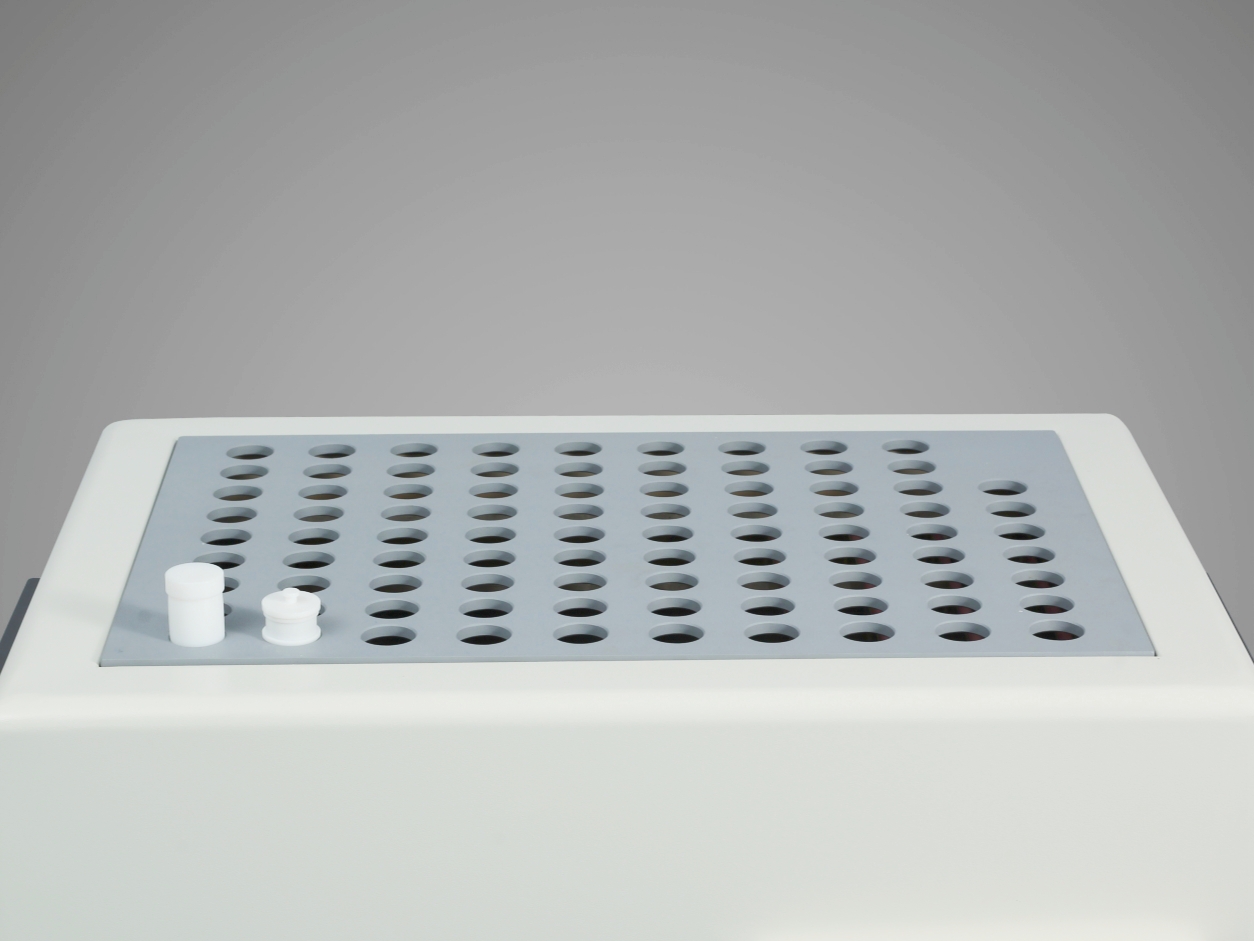
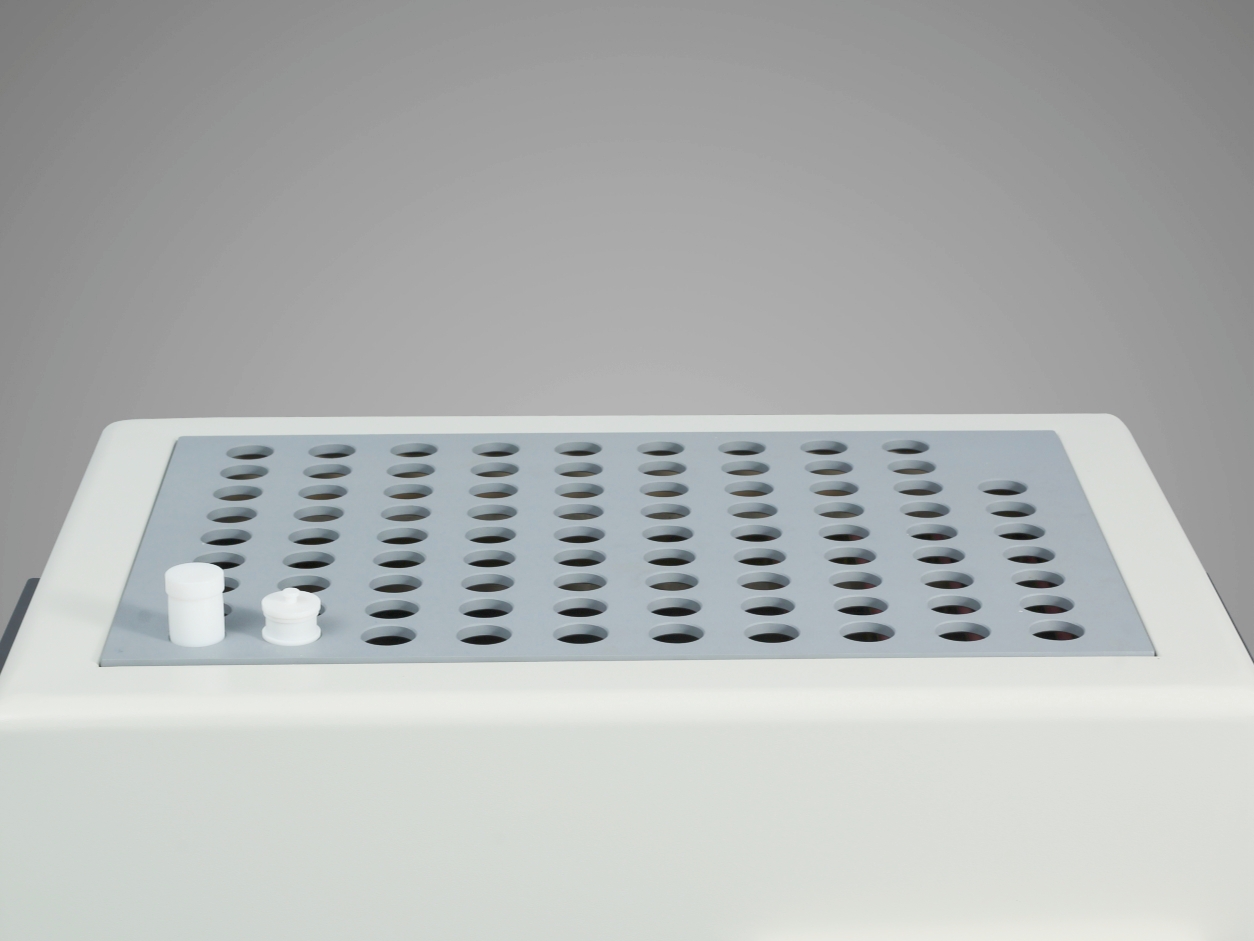
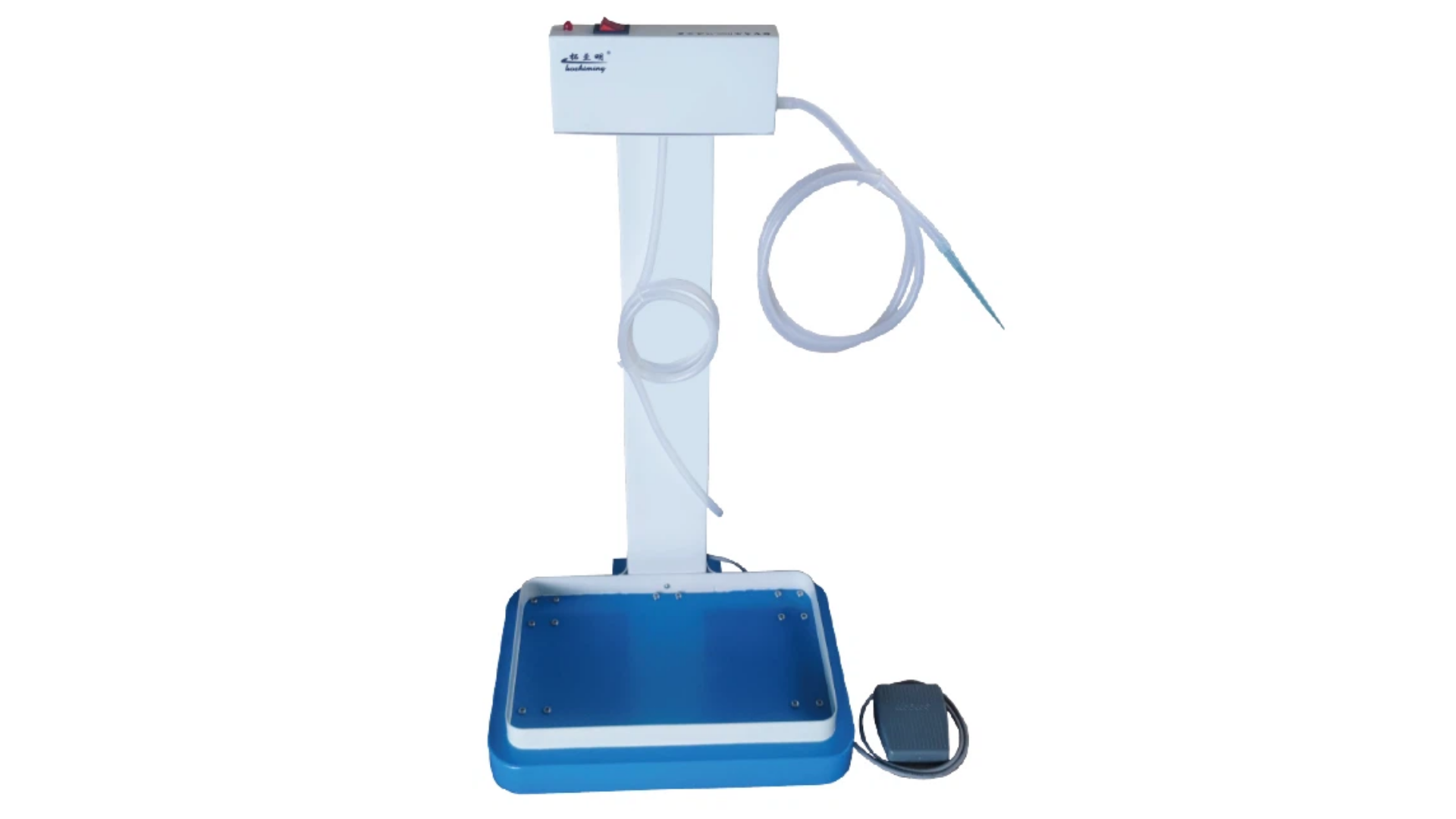
As one concrete example, Tuozhiming's glassware cleaning instruments list two models: HGC-15, with overall dimensions of 390 × 340 × 760 mm and a 280 mm-diameter chassis; and HGC-32, with overall dimensions of 410 × 300 × 760 mm and a 340 × 210 mm chassis. The published family features include pressure self-flushing, no manual pressing, and a volume-setting function. The listing does not provide wash temperatures, circulation rates, cycle programs, rack specifications, or drying-system details, so these must be confirmed directly with the supplier.
6. What documentation supports performance and maintenance?
Ask for operating instructions, the maintenance procedure, compatible cleaning chemicals, the available service support, and any application-specific cleaning-performance information. If the laboratory requires documented or validated cycles, establish whether the exact quoted machine offers the necessary functions before committing to purchase.
Together, these questions form a practical purchasing specification. They also allow smaller, simpler cleaning instruments and larger automated washer systems to be compared on the same basis without claiming that they offer identical features.
FAQ
Can a household dishwasher be used for laboratory glassware?
A residential dishwasher is not a straightforward substitute for a laboratory washer. Laboratory-specific racks, cleaning programs, water quality, and process controls can be essential for analytical glassware.
Why is deionized water useful in the final rinse?
A DI rinse helps avoid adding ions from ordinary water to cleaned glassware. Verify the quality and plumbing route of the rinse supply rather than assuming a purified rinse is available.
Do all laboratory washers clean volumetric flasks and pipettes?
No. Hollow and narrow-neck items may require direct-injection baskets or specialized holders. Confirm compatibility with the exact vessel type and accessory configuration.
Does high spray pressure guarantee better cleaning?
No. Cleaning also depends on circulation, direct contact with the interior surfaces, time, temperature, and detergent. Very high pressure can be a concern for delicate glassware.
Do the HGC-15 and HGC-32 include hot-air drying?
The supplied product information does not establish a drying feature. Ask Tuozhiming to confirm the exact model's drying options, if any, together with its cycle and water-system specifications.
To evaluate whether the HGC series fits your glassware inventory and cleaning process, share your vessel types, required rinse quality, and daily load with Tuozhiming, then request a quote with the remaining specifications confirmed in writing.