For laboratories handling routine elemental analysis, environmental monitoring, food testing, or industrial quality control, digestion capacity directly affects how many samples can move through the preparation stage each day. However, a digestion block with more positions is not automatically more productive. Practical throughput depends on the number of usable positions, digestion tube volume, heating and cooling time, temperature uniformity under full load, operator handling time, and the requirements of the analytical method.
When these factors are evaluated together, procurement teams can select capacity according to real workload rather than choosing equipment simply because it offers the highest tube count. This distinction becomes especially important in laboratories where batch consistency matters as much as speed.
How Many Samples Can a Digestion Block Process per Batch?
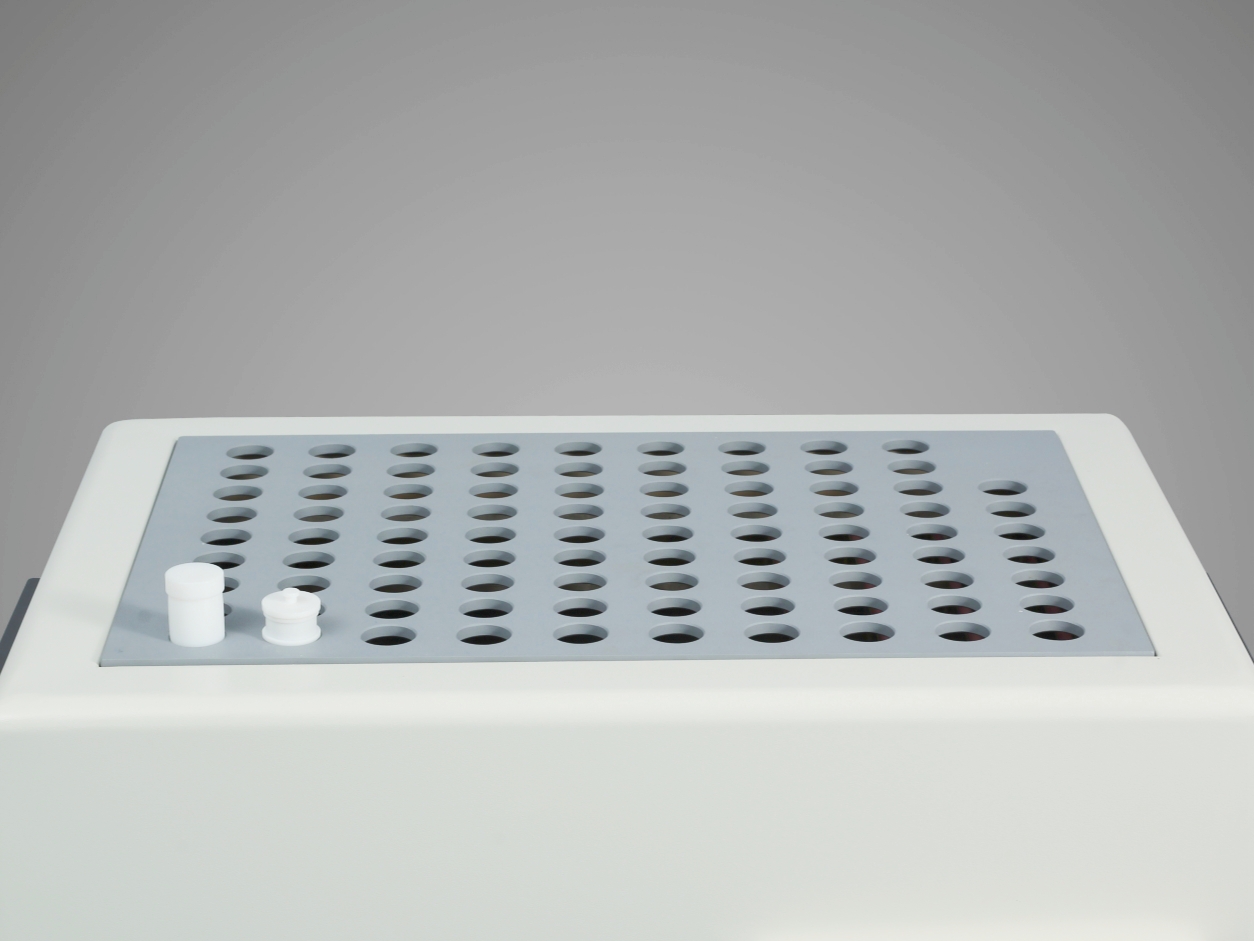
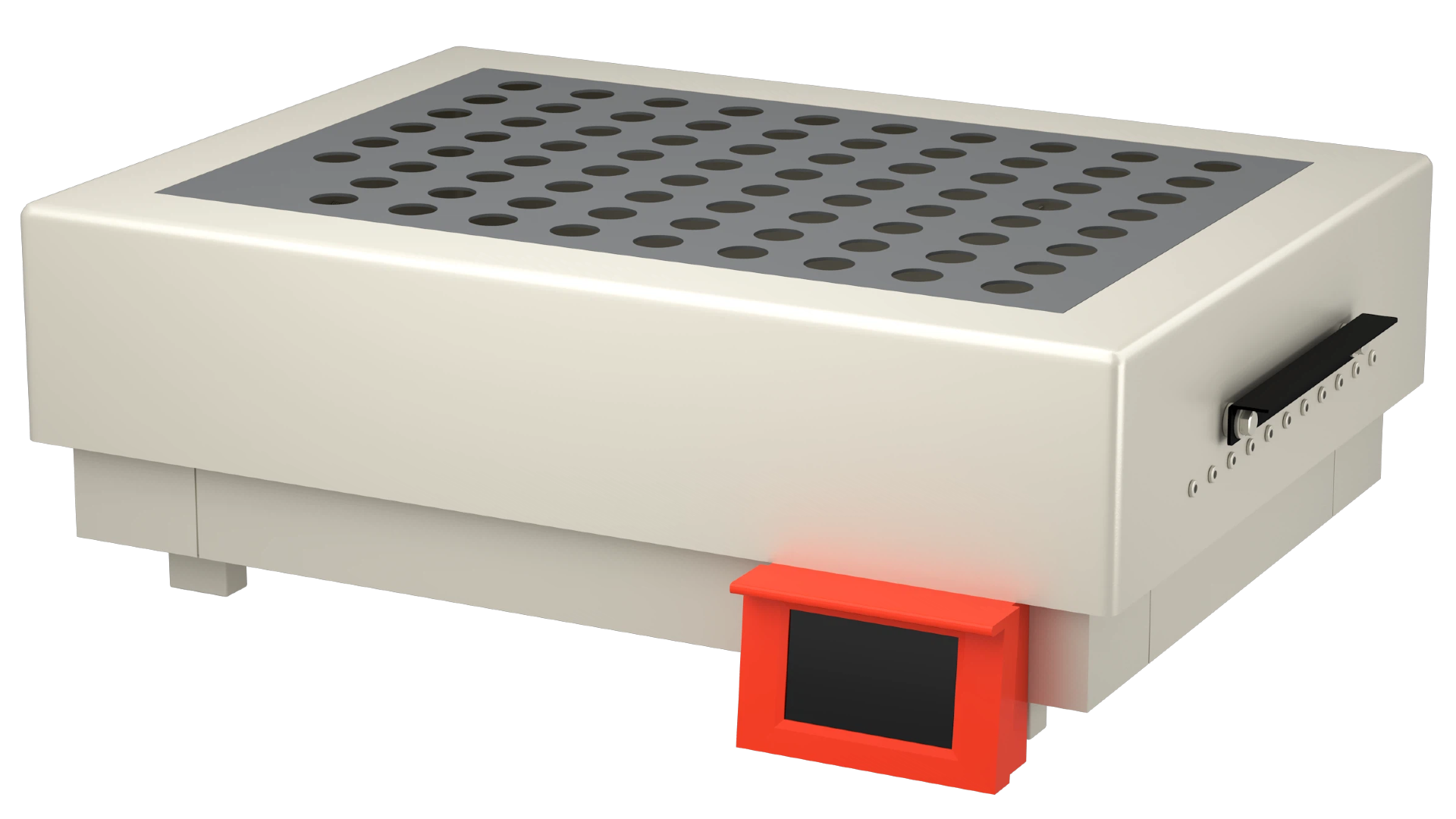
The number of heating positions determines the theoretical maximum number of samples that can be processed in one batch. A 20-position system may digest up to 20 vessels at a time, while 40- or 80-position configurations can accommodate substantially larger batches when the selected tube size and method are compatible.
Yet position count should always be read together with vessel capacity. An 80-position block designed for 10 or 15 mL tubes serves a different workflow from a 20-position system configured for 50 or 100 mL vessels. The former favors high-volume processing of relatively small sample aliquots, whereas the latter may be better suited to methods requiring larger digestion volumes, higher reagent volumes, or more headspace.
For this reason, professional buyers should compare samples per batch, tube volume, recommended working volume, and the digestion method as one specification set rather than treating the number of holes as an isolated performance indicator.
Does More Digestion Positions Always Mean Higher Throughput?
Not necessarily. Increasing the number of positions raises theoretical batch capacity, but daily productivity depends on whether the complete system can maintain the same operating efficiency when fully loaded. A block that accepts 80 tubes but requires significantly longer heating, cooling, loading, or cleaning time may not deliver twice the daily throughput of a well-optimized 40-position system.
Practical throughput is better understood as the number of samples successfully completed per shift. Heating ramp time, digestion hold time, cooling time, vessel handling, program setup, and the frequency of repeat digestion all contribute to that result. Reducing any of these non-productive intervals can sometimes improve laboratory output more effectively than simply adding more positions.
When evaluating a digester block for batch work, laboratories should therefore ask how the equipment performs at full capacity, whether temperature recovery changes after all positions are loaded, and whether the operating workflow allows consecutive batches to be started without excessive delay.
How Do Tube Size and Tube Material Affect Batch Efficiency?
Tube size affects both capacity and process design. Smaller vessels can allow more positions to be arranged within a compact heating area, supporting high-throughput workflows in which only limited sample and reagent volumes are required. Larger vessels occupy more block space but provide greater working volume, which may be necessary for specific matrices or digestion procedures.
Tube material also matters. PTFE, polypropylene, quartz, and glass differ in chemical resistance, temperature capability, transparency, cost, and suitability for specific acid systems. Supporting several vessel materials can make a digestion block more adaptable, particularly in laboratories processing different sample matrices or following multiple methods.
Compatibility should not be assumed from diameter alone. The vessel must fit the heating well correctly, allowing efficient heat transfer without excessive mechanical stress. Buyers should confirm supported tube dimensions, recommended materials, working temperature, and whether interchangeable blocks or customized hole configurations are available.
Why Does Temperature Uniformity Matter More at Full Load?
High-capacity digestion is only useful when samples receive sufficiently consistent thermal treatment across the entire block. With every position occupied, differences between central and edge locations may become more noticeable if heater distribution, insulation, sensor placement, or block geometry is poorly controlled.
Uneven heating can lead to different digestion rates among vessels, leaving some samples incompletely digested while others receive unnecessary thermal exposure. In laboratories preparing samples for ICP-OES, ICP-MS, AAS, or other quantitative techniques, such variation may affect reproducibility and increase the need for repeat preparation.
For procurement, maximum temperature is therefore less informative than temperature uniformity and stability under realistic loading conditions. Requesting full-load uniformity data, control accuracy, and information about sensor placement provides a stronger basis for comparing systems intended for batch operation.
How Should Laboratories Estimate Daily Sample Throughput?
A practical estimate should start with usable samples per batch and the number of complete batches that can realistically be finished during a working shift. Laboratories should include heat-up time, digestion time, cooling, unloading, cleaning, and preparation for the next batch rather than calculating throughput from vessel count alone.
For example, an 80-position system may appear to offer twice the capacity of a 40-position model. If the 80-position system completes only three full cycles per shift while the 40-position system completes five, their theoretical daily outputs become much closer than the position count initially suggests. The comparison becomes even more relevant when some positions must remain unused because of method restrictions, oversized tubes, or quality-control samples.
Laboratories should also consider utilization rate. A facility receiving irregular sample volumes may rarely fill an 80-position block, whereas a contract testing laboratory processing hundreds of similar samples each day may benefit substantially from larger batch capacity. Matching equipment size to the actual sample arrival pattern helps avoid both bottlenecks and unnecessary capital expenditure.
How to Choose Digestion Block Capacity for Your Laboratory
Capacity selection should begin with the laboratory's routine method rather than the largest available specification. Defining average daily sample volume, peak workload, vessel size, digestion chemistry, required temperature, and downstream analytical technique makes it easier to determine whether a low-, medium-, or high-capacity configuration is appropriate.
For lower-volume laboratories, a smaller block can provide sufficient capacity while reducing bench-space requirements and simplifying operation. Medium-throughput laboratories may benefit from 24- to 40-position systems that balance vessel size and batch productivity. High-throughput testing facilities, where large numbers of similar samples are processed every day, may justify 60- to 80-position configurations provided that full-load temperature uniformity and workflow efficiency remain controlled.
Before purchasing, buyers should request the supported tube sizes, maximum and recommended working temperatures, temperature uniformity, heating rate, control accuracy, compatible vessel materials, available block configurations, and expected performance under full load. These specifications reveal more about real batch productivity than position count alone.
Digestion Block FAQs
Is an 80-Position Digestion Block Always Better Than a 40-Position Model?
No. An 80-position system offers greater theoretical batch capacity, but the better choice depends on tube volume, digestion cycle time, full-load temperature uniformity, sample volume, and how many positions the laboratory can actually utilize during routine work.
Does a Fully Loaded Digestion Block Heat More Slowly?
It can, depending on heater power, block mass, vessel volume, sample load, and control design. Buyers should compare heating performance and temperature recovery under representative loading conditions rather than relying only on no-load specifications.
Can Different Digestion Tube Sizes Be Used on the Same System?
This depends on the block design. Some systems support interchangeable or customized heating blocks, while others are manufactured for fixed vessel dimensions. Tube diameter, length, material, and recommended working volume should all be confirmed before purchase.
What Is the Most Important Specification for High-Throughput Digestion?
There is no single specification. Batch capacity, cycle time, temperature uniformity, vessel compatibility, handling efficiency, and repeatability should be assessed together. For professional laboratories, reliable completed samples per shift is a more useful measure than the maximum number of holes.
Conclusion
Digestion block capacity is an important part of laboratory productivity, but more positions do not automatically guarantee higher throughput. A well-matched system combines appropriate batch size with suitable vessel volume, efficient heating, controlled full-load temperature uniformity, practical handling, and compatibility with the laboratory's digestion methods.
By evaluating completed samples per shift rather than tube count alone, procurement teams can distinguish between nominal capacity and usable productivity, selecting a digestion block that supports both current workload and future testing demand without sacrificing consistency or analytical reliability.