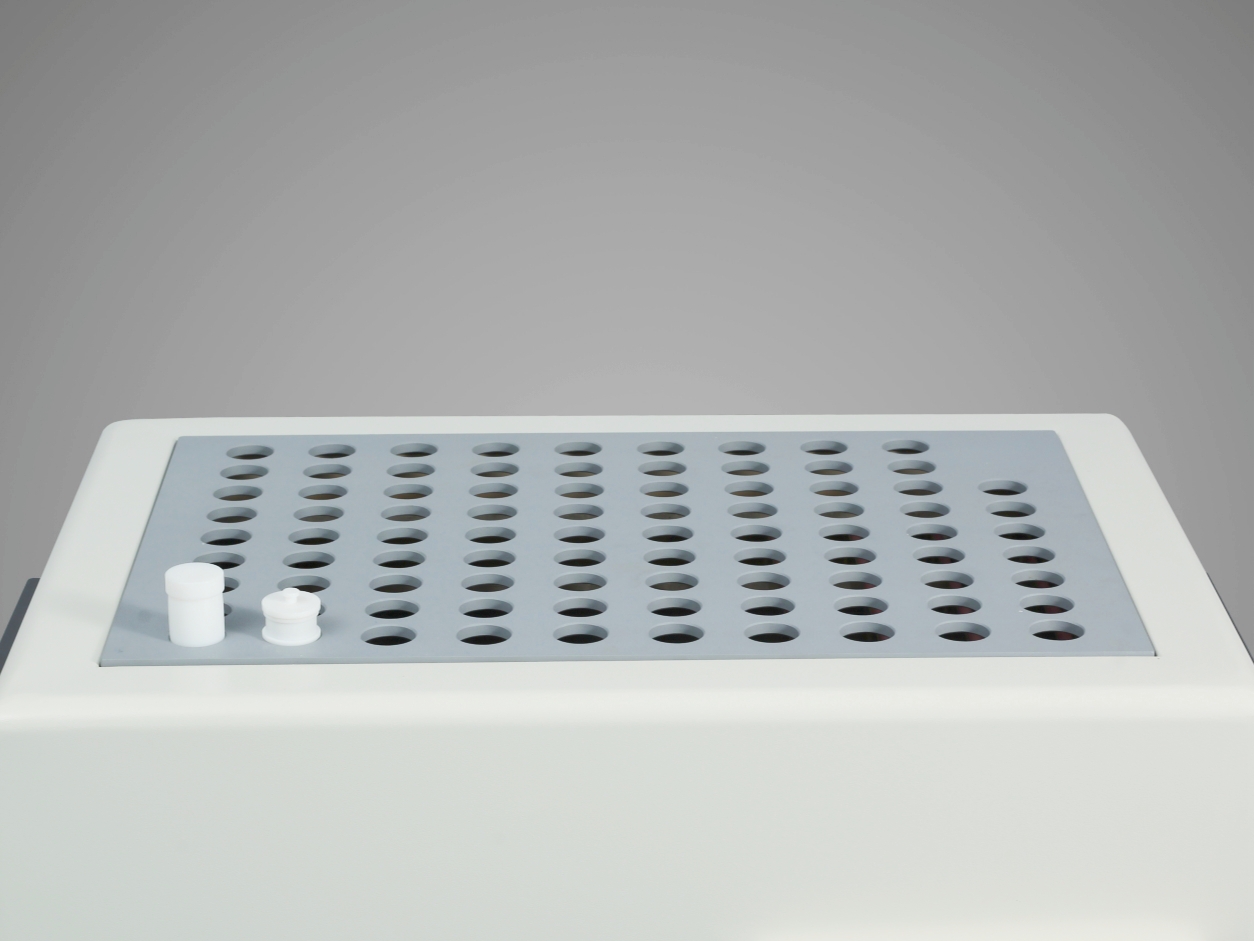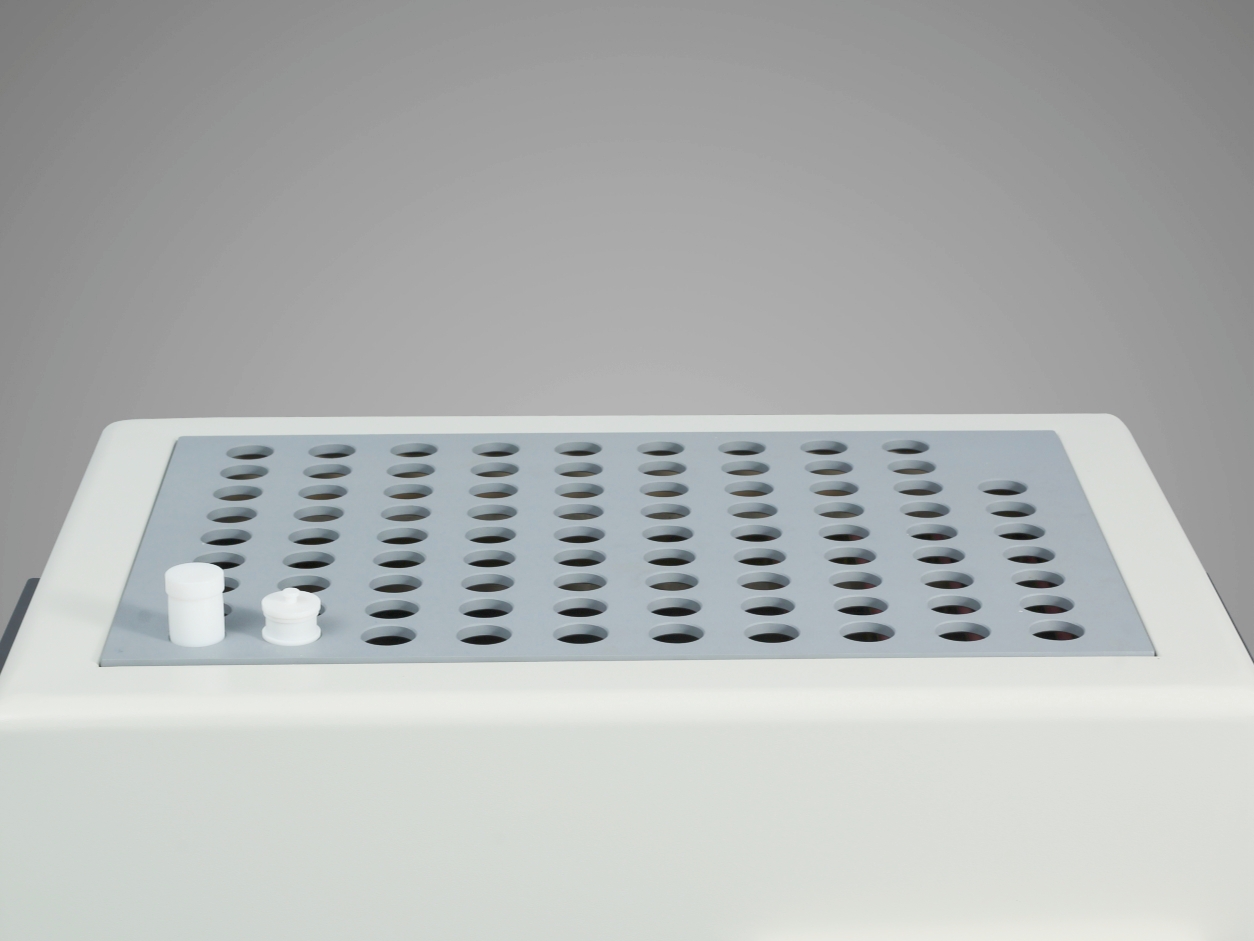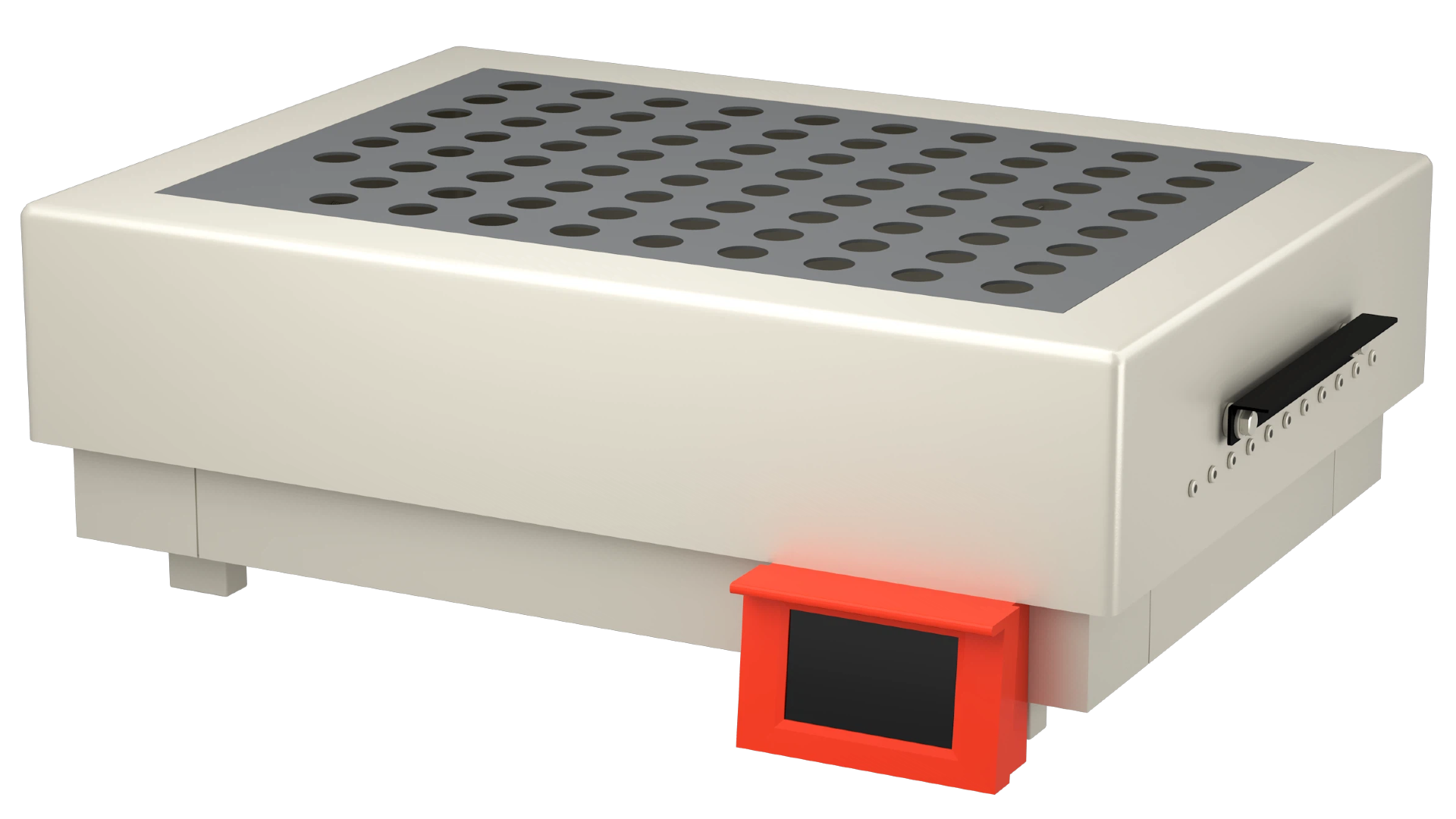
An external digestion block controller separates the user interface from the heated digestion area, allowing operators to set and monitor supported parameters without repeatedly working beside a hot block where corrosive fumes may be present. Used particularly when digestion equipment is installed inside a fume hood, this arrangement can improve accessibility and operating convenience while helping laboratories organize a safer sample-preparation workflow.
External control, however, should not automatically be interpreted as network-based remote control. A controller connected by cable to the heating unit is fundamentally different from a system offering Wi-Fi, Ethernet, cloud access, or mobile-app operation. For laboratory buyers, understanding that distinction is important, because the value of an external controller lies mainly in physical separation, parameter access, process visibility, and integration with the digestion workspace.
What Is an External Controller on a Digestion Block and How Does It Work?
A conventional integrated control panel is mounted directly on the instrument body. With an external controller, the operating interface is physically separated from the heating block and connected to it through a dedicated cable or control module. The heated unit can therefore remain inside the working area, while the display and control interface are positioned where the operator can access them more easily.
Depending on the system design, the controller may provide temperature setting, timing, program selection, real-time status display, alarm information, or other functions. Because available functions vary significantly by model, buyers should verify which parameters can actually be adjusted from the external interface rather than assuming that every touchscreen provides full process control.
This distinction also prevents a common purchasing misunderstanding: external control describes the physical arrangement of the interface, whereas true remote access normally requires a communication network and dedicated software. Unless Wi-Fi, LAN, Ethernet, cloud connectivity, or similar functions are specified, the controller should be understood as an external operating interface rather than an internet-connected remote-control system.
Why Is an External Digestion Block Controller Useful When Operating Inside a Fume Hood?
Acid digestion often involves elevated temperatures and corrosive reagents, meaning that the heating unit is commonly operated in a fume hood or other ventilated environment. Positioning the controller outside or away from the immediate digestion zone can make routine operation more convenient, particularly when the operator needs to check settings, modify a program, or confirm the current temperature during a run.
Rather than repeatedly reaching toward the heated block, operators can interact with the control interface from a more accessible position. This physical separation can also help protect the controller from direct exposure to acid splashes and concentrated fumes, provided that the installation follows the manufacturer's placement and ventilation requirements.
For laboratories comparing a new laboratory digestion block, the practical question is therefore not simply whether an external screen is provided, but whether the controller can be positioned conveniently relative to the fume hood, whether the cable length is suitable, and whether the screen remains readable during routine operation.
Can Operators Control Temperature, Time and Digestion Programs from the External Controller?
This is one of the most important questions for professional buyers. A touchscreen alone does not define control capability. What matters is which process parameters the system exposes to the operator and how reliably those settings are executed by the heating system.
When reviewing specifications or requesting a quotation, laboratories may need to confirm whether the controller supports:
· Target temperature setting and real-time temperature display
· Digestion time or countdown control
· Multi-step temperature programs or heating stages
· Method or program storage for repeated workflows
· Over-temperature alarms and operating-status warnings
· Pause, stop, or recovery functions after an interrupted run
· Data output or process records, where required by the laboratory workflow
Not every application requires all of these features. A routine environmental laboratory processing the same sample type every day may value saved methods and repeatable programs, while a research laboratory may place greater emphasis on flexible temperature and time adjustments. Matching controller functions to the actual workflow generally produces a more useful purchasing decision than selecting equipment simply because it has a larger touchscreen.
Does an External Controller Improve Safety During Acid Digestion?
An external controller can support a safer operating arrangement by reducing the need for frequent interaction directly beside the heated digestion zone. Keeping the user interface away from the block may reduce unnecessary proximity to hot surfaces and corrosive vapors, especially when the equipment is operating in a fume hood.
That benefit should not be overstated. External control does not eliminate the hazards associated with acid digestion, nor does it replace appropriate ventilation, personal protective equipment, chemical-handling procedures, compatible digestion vessels, or operator training. Loading tubes, adding reagents, removing samples, cleaning spills, and maintaining the equipment still require direct laboratory procedures.
From a procurement perspective, the better question is whether the controller design helps reduce avoidable intervention during the heating stage. If temperature, time, status, and alarms can be viewed from an accessible position, operators may be able to supervise the process with fewer unnecessary interactions around the hot digestion area.
Does Controller Location Affect Temperature Accuracy or Digestion Performance?
The physical location of the controller does not, by itself, determine temperature accuracy. Accurate and repeatable digestion depends on the complete thermal-control system, including sensor configuration, heater distribution, control logic, block geometry, insulation, vessel contact, and calibration.
For this reason, a product advertised with an external touchscreen should still be evaluated using the same thermal-performance criteria applied to any digestion system. Professional buyers should ask for specifications covering temperature control accuracy, temperature uniformity across positions, operating range, heating stability, and, where available, full-load performance.
The location of the temperature sensor is also relevant. A displayed block temperature is not necessarily identical to the actual liquid temperature inside every digestion tube. Understanding what the sensor measures, how the system is calibrated, and how evenly heat is distributed across all positions becomes especially important when laboratories require consistent digestion across a batch.
What Should Laboratories Check When Buying a Digestion Block with an External Controller?
When external control is part of the purchasing requirement, laboratories should evaluate both the controller and the heating system rather than treating the screen as a standalone feature. A practical purchasing checklist should include the following points:
|
Purchasing Point |
What to Verify |
|
Controller placement |
Whether the controller can be positioned conveniently outside or beside the fume hood |
|
Cable configuration |
Cable length, routing requirements, connector design, and replacement availability |
|
Control functions |
Temperature, time, programs, alarms, status display, and supported settings |
|
Thermal performance |
Temperature accuracy, uniformity, stability, and full-load behavior |
|
Fume-hood compatibility |
Space requirements, ventilation arrangement, and installation clearance |
|
Chemical environment |
Resistance of exposed surfaces and the controller location relative to acid fumes |
|
Operating continuity |
Behavior after alarms, power interruptions, or program stops |
|
Serviceability |
Availability of controller, cable, sensor, and electronic replacement parts |
For high-throughput or method-driven laboratories, these questions can be extended to program storage, user permissions, audit records, and data connectivity. For routine digestion, however, a simple external controller may already provide meaningful value if it offers reliable parameter access, clear process visibility, and convenient operation outside the immediate digestion zone.
Conclusion
An external digestion block controller is best understood as an operational design feature rather than a claim of internet-based remote control. By separating the user interface from the heated digestion area, it can make a laboratory workflow easier to manage, particularly when acid digestion is performed inside a fume hood.
For professional buyers, the key evaluation points are not the touchscreen size or the word 'remote' in a brochure, but what the controller can actually do, how it is positioned, how the heating system performs under load, and whether the complete configuration fits the laboratory's safety and sample-preparation workflow. Evaluating those factors together helps distinguish a useful external-control design from a purely cosmetic interface feature.